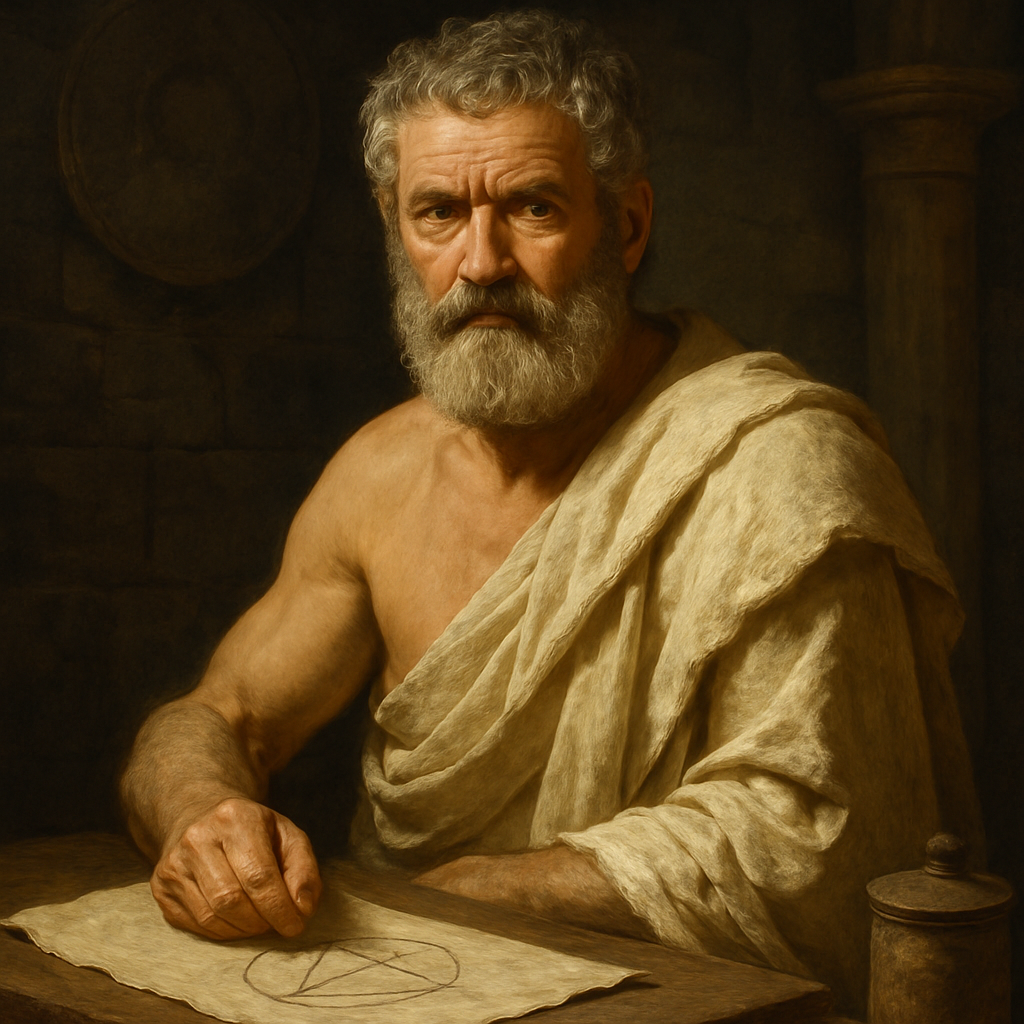
Thales of Miletus: The Ancient World’s First Superstar Thinker!
Imagine a time long, long ago, before smartphones, cars, or even well-organized schools. Now imagine a brilliant mind in that world, someone who looked at the sky and asked "Why?" instead of just enjoying the view. That’s Thales of Miletus, often called the very first philosopher and scientist! (Stanford Encyclopedia of Philosophy, 2021; Encyclopaedia Britannica, 2023) He shook up how people thought about the world, moving from myths to smart, logical reasoning.
Miletus: A Cradle of Thought
Thales was born in the bustling Greek city of Miletus, located in what is now Turkey, around 624 BCE. (Stanford Encyclopedia of Philosophy, 2021) We don't know much about his family or early life, which is common for people from so long ago!
But we do know he lived in a place where different cultures met, and new ideas were always buzzing. This vibrant environment might have helped spark his curious mind, inspiring him to explore big questions about the universe. (Internet Encyclopedia of Philosophy, n.d.)
The Practical Genius
Thales wasn't just a daydreamer; he was a practical genius. One of his most famous stories tells of how he accurately predicted an eclipse of the sun! (Herodotus, c. 440 BCE; Pliny the Elder, c. 77 CE)
While some sources debate the exact year, the fact that he was credited with such a feat shows his advanced understanding of the heavens. He likely used astronomical tables from the Babylonians, who had been observing stars for centuries. (Stanford Encyclopedia of Philosophy, 2021) This wasn't magic; it was math and observation!
Hallmark Moments in Thales's Legacy
- Predicting the Eclipse: This amazing feat, though debated in its details, cemented his reputation as a wise and knowledgeable figure. (Herodotus, c. 440 BCE)
- "Water is Everything!": Thales proposed that water was the fundamental building block of all things. While not scientifically accurate by today's standards, this was a HUGE leap! Instead of saying gods created everything, he looked for a single, natural cause. (Aristotle, c. 335 BCE; Stanford Encyclopedia of Philosophy, 2021)
- Early Geometry Guru: He used geometric principles to measure the height of pyramids by their shadows and the distance of ships from shore. (Diogenes Laërtius, c. 250 CE) He's even credited with several geometry theorems, like the idea that a circle's diameter divides it into two equal halves. (Encyclopaedia Britannica, 2023)
- The Smart Investor: One story says he proved the value of philosophy by predicting a great olive harvest. He then wisely bought up all the olive presses, making a fortune when the harvest came, showing that smart thinking can be very practical! (Aristotle, c. 335 BCE)
Quirky Corners of Thales's Life
- Stargazing Slip-up: Legend says he was so busy looking at the stars that he fell into a ditch! A servant girl reportedly poked fun at him, saying he was trying to understand the heavens but couldn't see what was right under his nose. (Plato, c. 385 BCE)
- The Bachelor Philosopher: When asked why he didn’t marry or have children, he supposedly replied that it was “for love of children,” implying he wished to spare himself the worries of a family. (Diogenes Laërtius, c. 250 CE)
- "Know Thyself": He is believed to be the first of the "Seven Sages" of Greece, a group of highly respected wise men. One famous saying attributed to him is "Know thyself." (Diogenes Laërtius, c. 250 CE)
Thales's Enduring Ripple Effect
Thales's ripple effect is enormous. He truly kicked off Western philosophy and science by encouraging us to look for natural explanations for the world around us, rather than relying solely on myths. (Internet Encyclopedia of Philosophy, n.d.) He inspired countless thinkers to ask questions, observe, and reason. He showed that the human mind could unlock the secrets of the universe, and that’s a legacy that continues to empower scientists and thinkers to this very day!
Fast Facts Box
- Born: c. 624 BCE, Miletus, Ionia (modern-day Turkey) (Stanford Encyclopedia of Philosophy, 2021)
- Died: c. 546 BCE (Stanford Encyclopedia of Philosophy, 2021)
- Known For: First Western Philosopher, First Scientist, predicting an eclipse, proposing water as the fundamental element, early geometry (Encyclopaedia Britannica, 2023)
- Signature Quote (attributed): "The most difficult thing in life is to know yourself." (Diogenes Laërtius, c. 250 CE)
References:
- Aristotle. (c. 335 BCE). Metaphysics.
- Diogenes Laërtius. (c. 250 CE). Lives of Eminent Philosophers.
- Encyclopaedia Britannica. (2023, November 28). Thales of Miletus. Retrieved from https://www.britannica.com/biography/Thales-of-Miletus
- Herodotus. (c. 440 BCE). The Histories.
- Internet Encyclopedia of Philosophy. (n.d.). Thales of Miletus. Retrieved from https://iep.utm.edu/thales/
- Plato. (c. 385 BCE). Theaetetus.
- Pliny the Elder. (c. 77 CE). Natural History.
- Stanford Encyclopedia of Philosophy. (2021, September 10). Thales. Retrieved from https://plato.stanford.edu/entries/thales/