Wangari Maathai: The Environmental Superhero
Get ready to meet a true superhero, but not one who wears a cape! Wangari Maathai was a powerhouse from Kenya who taught the world that you can change things for the better, one tree at a time. She was a champion for the environment, for women’s rights, and for peace, proving that even big problems can be solved with passion and persistence (Nobel Prize Organization 2004).
Early Life and Education
Wangari was born in 1940 in a small village called Ihithe in central Kenya, nestled in the green hills of the Aberdare Mountains (The Green Belt Movement 2024). Her family were farmers, and she grew up surrounded by nature, learning to appreciate the life-giving power of the forest and the soil (Nobel Prize Organization 2004).
She was a brilliant student, and unlike many girls at the time, her parents sent her to school. This was a really big deal! She eventually earned a scholarship to study in the United States, which was an incredible opportunity for a young woman from rural Kenya (The Green Belt Movement 2024).
A Return to Kenya and a Vision for Change
After getting her master's degree and even a Ph.D. — making her the first woman in East and Central Africa to earn a doctorate! — Wangari returned to Kenya, ready to make a difference (Nobel Prize Organization 2004; The Green Belt Movement 2024).
She saw that Kenya was losing its trees at an alarming rate. Forests were being cleared for farming and building, and this was causing all sorts of problems: the land was drying up, rivers were shrinking, and people didn't have enough firewood. Wangari knew something had to be done (UN Environment Programme 2012).
The Birth of The Green Belt Movement
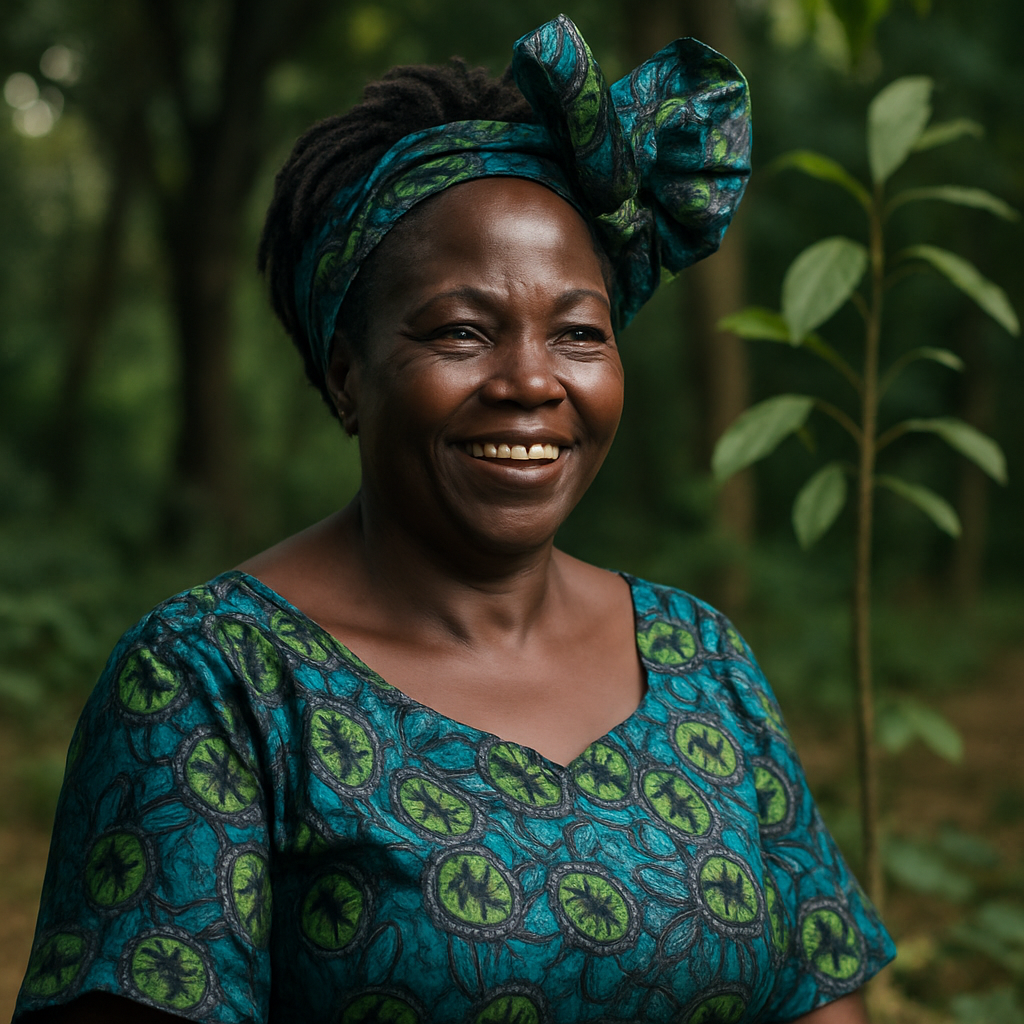
In 1977, she had a brilliant idea: what if people planted trees themselves? She started a simple movement called the "Green Belt Movement," encouraging women in rural communities to plant trees for fuel, food, and to stop soil erosion (The Green Belt Movement 2024).
What started small grew into a massive wave of change!
Millions of trees were planted, helping the environment and also empowering women who were involved. This wasn't just about trees; it was about giving people hope and the power to improve their own lives (Nobel Prize Organization 2004).
Facing Challenges with Unwavering Commitment
Wangari faced a lot of challenges, including threats and even arrests, as she stood up to powerful people who didn't like her work (UN Environment Programme 2012). But she never gave up! Her unwavering commitment captured the world's attention.
Hallmark Moments
- First Woman PhD in East and Central Africa: In 1971, she made history by earning her doctorate (Nobel Prize Organization 2004).
- Founder of the Green Belt Movement: Started in 1977, it led to the planting of over 51 million trees in Kenya (The Green Belt Movement 2024).
- Nobel Peace Prize Laureate: In 2004, she became the first African woman to receive the Nobel Peace Prize for her work on sustainable development, democracy, and peace (Nobel Prize Organization 2004).
- Member of Parliament: She served in Kenya's parliament from 2002 to 2007 (The Green Belt Movement 2024).
Quirky Corner
- Wangari actually began her university studies with biology, loving the natural world (Nobel Prize Organization 2004).
- She often wore a distinctive necklace with a tree pendant, symbolizing her life's work (The Green Belt Movement 2024).
- Even though she was world-famous, she always emphasized that the Green Belt Movement was a collective effort, powered by many hands (UN Environment Programme 2012).
Legacy
Wangari Maathai passed away in 2011, but her legacy lives on. She showed us that protecting the environment is essential for peace and human well-being. Her work inspired people worldwide to take action for their communities and the planet. She taught us that a single seed, whether it's a tree seed or an idea, can grow into something truly magnificent (UN Environment Programme 2012).
Fast Facts
- Born: April 1, 1940
- Died: September 25, 2011
- Notable Works: The Green Belt Movement, Unbowed: A Memoir
- Signature Quote: "When we plant trees, we plant the seeds of peace and hope." (Nobel Prize Organization 2004)
Sources
- Nobel Prize Organization. (2004). The Nobel Peace Prize 2004. Retrieved from https://www.nobelprize.org/prizes/peace/2004/maathai/facts/
- The Green Belt Movement. (2024). About Wangari Maathai. Retrieved from https://www.greenbeltmovement.org/wangari-maathai/
- UN Environment Programme. (2012). Wangari Maathai: The visionary who preached ‘green for peace’. Retrieved from https://www.unep.org/news-and-stories/story/wangari-maathai-visionary-who-preached-green-peace