Alfred Nobel: The Father of Dynamite and Peace
Get ready to meet a true force of nature, a brilliant inventor who figured out how to make powerful explosions safer and then, in a surprising twist, used his massive fortune to promote peace and human progress. We’re talking about Alfred Nobel, the amazing mind behind the Nobel Prizes!
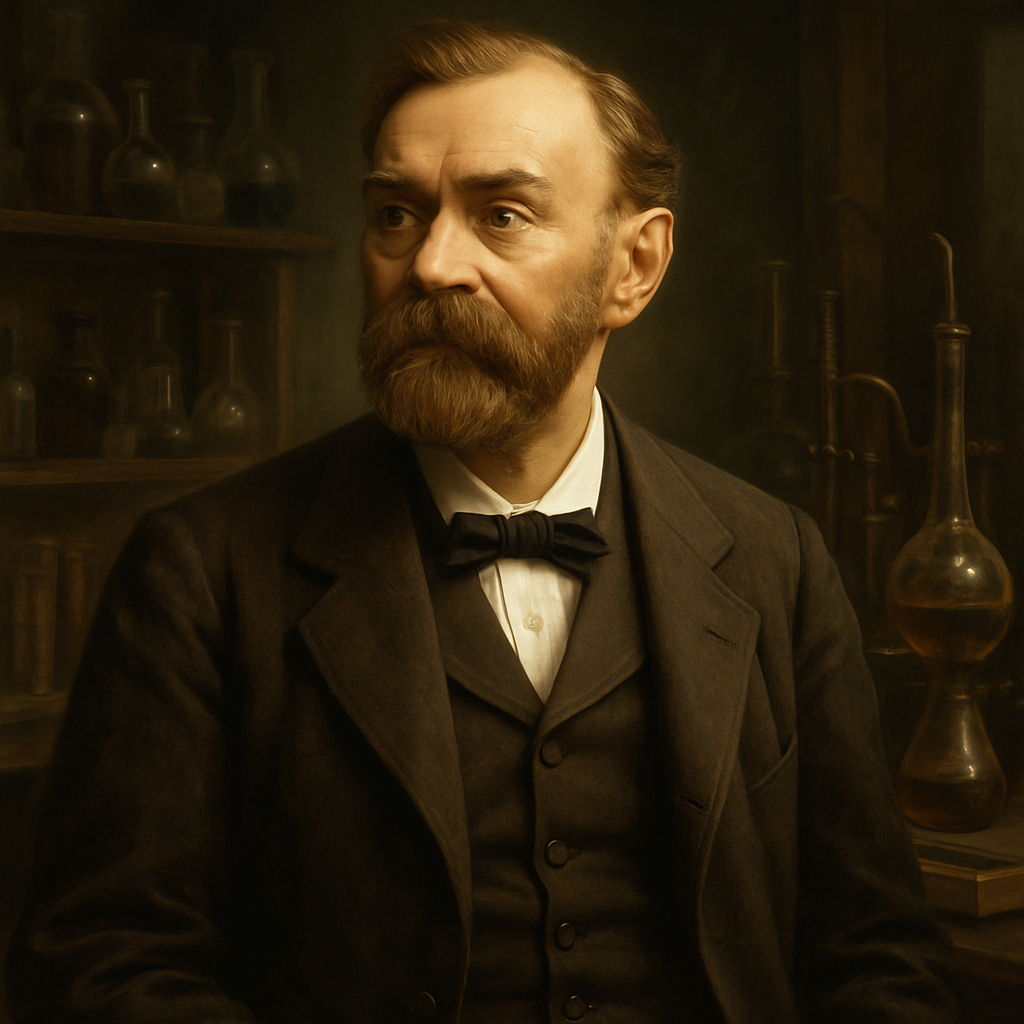
Early Life and Education
Alfred was born in Stockholm, Sweden, on October 21, 1833, into a family with a real knack for engineering and invention. His father, Immanuel Nobel, was an inventor himself and eventually moved to Russia, where the family joined him in 1842.
Little Alfred was mostly homeschooled by top tutors. He learned chemistry, physics, and several languages, becoming super smart from a young age.
The Invention of Dynamite
As he grew up, Alfred became fascinated by nitroglycerin, a powerful but incredibly unstable liquid. People wanted to use it for blasting tunnels and mines, but it was too dangerous.
Sadly, Alfred even experienced tragedy firsthand when an explosion at his family's factory in 1864 killed his younger brother, Emil, and several other people. This devastating event only made him more determined to find a safer way.
And he did! In 1867, he invented dynamite by mixing nitroglycerin with a stable material called kieselguhr (also known as diatomaceous earth). This turned the scary liquid into a portable, workable paste that could be packed into sticks and safely detonated with a fuse and a blasting cap. Dynamite changed the world, making construction, mining, and engineering projects much easier and safer.
Hallmark Moments
- 1867: Invents Dynamite: This invention revolutionized industries worldwide, from mining to road construction.
- Holds 355 Patents: Alfred was a true inventing powerhouse, with a huge number of patents to his name for various explosives, synthetic rubber, and other industrial developments.
- A Vast Industrial Empire: By the time he died, Alfred owned factories and laboratories in over 20 countries.
- The Nobel Prizes: His most famous legacy, established in his will, recognizing outstanding achievements in physics, chemistry, medicine, literature, and peace.
Quirky Corner
- He was a bit of a reclusive person. Despite his wealth and fame, Alfred preferred quiet contemplation and spent much of his time in his laboratories.
- He wrote poetry and drama! Who knew the inventor of dynamite had a creative, artistic side? Though his literary works weren't widely recognized during his lifetime.
- The "Merchant of Death" headline. A French newspaper accidentally published his obituary eight years too early, mistaking his brother Ludvig for Alfred. The headline reportedly read "The merchant of death is dead," which deeply distressed Alfred and is sometimes cited as a motivation for his will.
Alfred Nobel died on December 10, 1896, in Sanremo, Italy. He never married or had children. But his incredible legacy lives on through the Nobel Prizes, which have honored more than 1,000 individuals and organizations for their world-changing contributions.
From the discovery of penicillin to breakthroughs in physics, and from passionate peace efforts to beautiful literature, the prizes continue to inspire and push humanity forward, just as Alfred hoped. He might have been a "merchant of death" to some, but he engineered a lasting legacy of hope and progress.
Fast Facts
- Born: October 21, 1833, Stockholm, Sweden
- Died: December 10, 1896, Sanremo, Italy
- Known For: Inventor of dynamite, establishing the Nobel Prizes
- Notable Works: Dynamite, blasting gelatin, ballistite (smokeless gunpowder)
- Signature Quote: "If I have 300 patents, it is due to my love of the laboratory."
Sources
- Biography.com. (2014, April 2). Alfred Nobel Biography. A&E Television Networks.
- Britannica. (2024, January 17). Alfred Nobel. Encyclopædia Britannica.
- Encyclopedia.com. (2004). Nobel, Alfred Bernhard. Gale.
- The Nobel Prize. (2024). Alfred Nobel – Biographical. The Nobel Foundation.
- The Nobel Prize Museum. (2020, December 10). The Accidental Obituary. The Nobel Prize Museum.