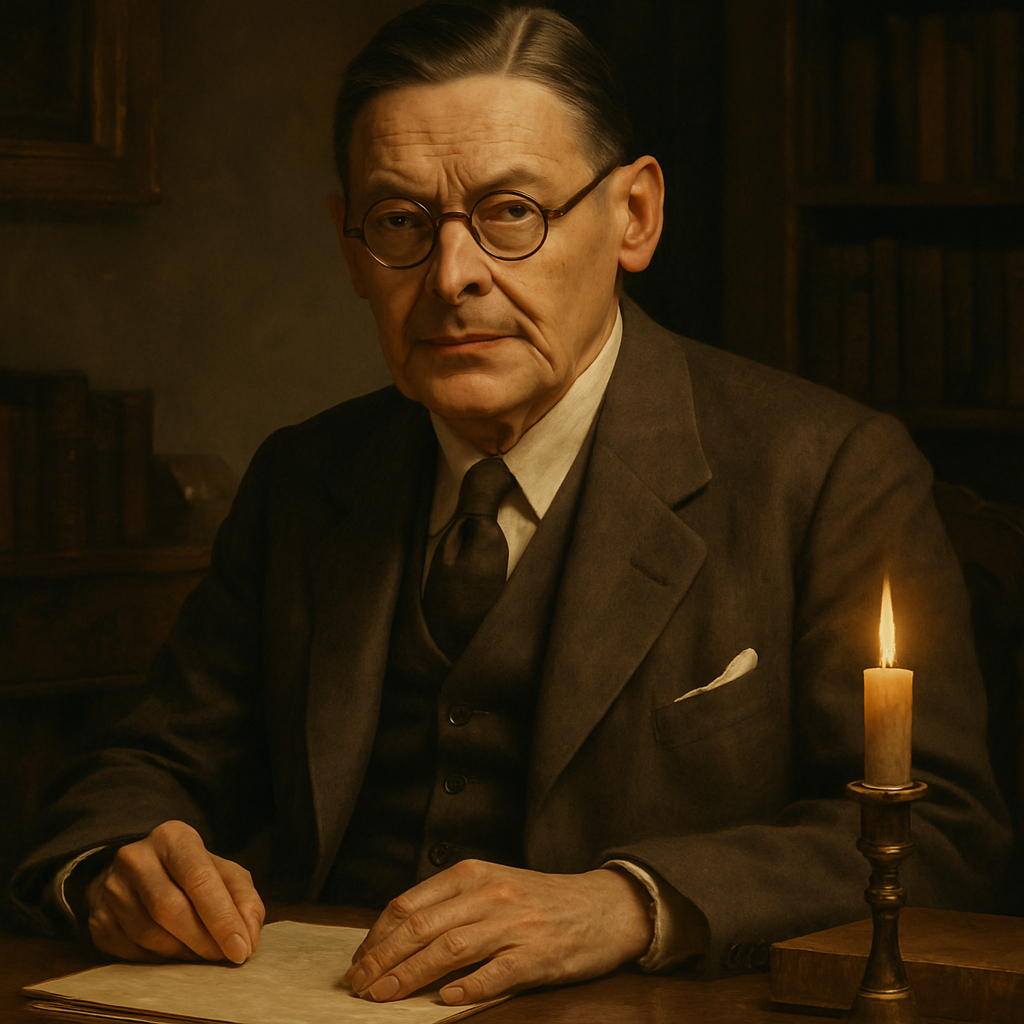
T.S. Eliot: A Literary Icon
Thomas Stearns Eliot, widely known as T.S. Eliot, was a literary figure who profoundly influenced modern poetry. Born in 1888 in St. Louis, Missouri, into an intellectually inclined family, his upbringing played a significant role in shaping his literary path. His father, Henry Ware Eliot, was a successful businessman, and his mother, Charlotte Champe Stearns, was a poet and social worker. This environment undoubtedly fostered his early inclination towards language and literature.
Young Eliot displayed early academic promise, attending Smith Academy in St. Louis before matriculating at Harvard University. There, he immersed himself in philosophy, literature, and languages. His intellectual journey continued with studies in Paris and at Merton College, Oxford, periods of exploration that were crucial in the development of his distinctive literary voice.
His breakthrough came with the publication of "The Love Song of J. Alfred Prufrock" in 1915. This poem, with its conversational tone, fragmented thoughts, and reflection of modern anxieties, captivated readers and marked a departure from traditional poetic forms.
However, it was "The Waste Land," published in 1922, that solidified his place in literary history. This complex, multi-layered work is widely regarded as a cornerstone of modernist literature, often interpreted as a profound commentary on the shattered post-World War I world.
T.S. Eliot's Shining Moments
- 1922: Published "The Waste Land," a revolutionary poem that marked a turning point in modern poetry.
- 1927: Became a British citizen and converted to Anglicanism, deeply influencing his later work.
- 1948: Awarded the Nobel Prize in Literature "for his outstanding pioneering contribution to present-day poetry.”
- 1953: His play "The Confidential Clerk" premiered, showcasing his continued influence beyond poetry.
Beyond his profound poetry, Eliot possessed some interesting quirks. Despite his reputation for serious, meditative verse, he also penned a collection of light-hearted poems about cats titled "Old Possum's Book of Practical Cats." This very book later inspired the famous musical "Cats"! It's a testament to his versatile mind that the poet of "The Waste Land" also harbored a fondness for felines.
Intriguingly, for many years, Eliot worked in a bank. One can only imagine the surreal sight of a future Nobel laureate handling financial transactions. Biographers also note his particular attention to appearance, often seen in a formal suit and bowler hat.
Eliot's impact on literature is immense. He was a pivotal figure in shaping "modernism" in poetry, challenging established forms and themes. His work delved into significant ideas concerning religion, identity, and the complexities of modern society. He injected new life into poetry, making it fresh, exciting, and, at times, provocatively perplexing, encouraging readers to engage in deep thought. To this day, his work remains a subject of intense study for students and scholars, and contemporary poets continue to draw inspiration from his bold, innovative approach. His far-reaching influence underscores how words, expertly wielded by a genius like Eliot, can indeed transform the world.
Fast Facts
- Born: September 26, 1888, St. Louis, Missouri, USA
- Died: January 4, 1965, London, England
- Notable Works: The Waste Land, The Love Song of J. Alfred Prufrock, Four Quartets, Old Possum's Book of Practical Cats
- Signature Quote: "Genuine poetry can communicate before it is understood."